

Introduction: Travel News September 2026
Travel News September 2026: September 2026 was a significant month for travel and tourism. It had Nigeria strengthening its domestic tourism drive and African destinations recording encouraging visitor growth. Artificial intelligence emerging as well, as one of the industry’s biggest conversations.
From Nigeria’s new 100-day Ember to Remember tourism season and the 22nd Akwaaba African Travel Market in Lagos. The rising international arrivals across Africa and the global tourism industry’s focus on artificial intelligence. September highlighted the opportunities as well as challenges shaping travel.
Here are nine important travel and tourism developments from Nigeria, Africa and around the world in September 2026. Read Travel News August 2026

🇳🇬 Nigeria Travel News September 2026
1. Nigeria Launches 100-Day “Ember to Remember” Tourism Season
Nigeria launched its new 100-day “Ember to Remember 2026” tourism season, bringing together tourism, culture, entertainment, hospitality, transportation, commerce and the creative economy from September through December.
The initiative was announced by the Federal Ministry of Art, Culture, Tourism and the Creative Economy as an effort to create a more coordinated national tourism season beyond the traditional December travel period.
The programme was formally flagged off in Lagos on September 14, with a national calendar designed to bring greater visibility to festivals, cultural experiences, food, fashion, entertainment and other tourism activities across Nigeria.
The Federal Government said the initiative is intended to create a stronger national tourism story and encourage visitors to explore Nigeria throughout the season rather than concentrating travel around the end of December.
The campaign also seeks to connect tourism with other parts of the creative economy and generate greater economic opportunities for businesses and communities.
Why it matters
For Nigeria’s tourism industry, Ember to Remember could become an important platform for packaging the country’s diverse experiences for domestic and international visitors.
It also creates an opportunity for destinations, hotels, tour operators, restaurants, airlines, event organisers and tourism media to work around a common tourism calendar.

2. Akwaaba African Travel Market Returns to Lagos
The 22nd Akwaaba African Travel Market took place at Eko Hotels & Suites in Lagos from September 13–15, 2026, bringing together travel and tourism professionals from Nigeria, Africa and international markets.
The annual event is one of West Africa’s major travel trade gatherings, connecting tourism boards, airlines, hotels, tour operators, destination management companies and other industry stakeholders.
The 2026 edition featured discussions and activities covering tourism, aviation, domestic tourism, medical tourism, youth tourism and African travel.
The event also featured the Akwaaba Travel Exhibition, Wonders of Nigeria Expo, African Youth Tourism, African Medical Tourism Expo, CHINET AviaCargo and the Jollof Rice War.
Why it matters
Events such as Akwaaba provide an important meeting point for African tourism businesses looking for partnerships, customers and new markets.
For Nigeria, hosting a major international travel trade event in Lagos also strengthens the city’s position as a business and tourism hub.

3. Ibom Air Reaches Five Million Passenger Milestone
Nigeria’s aviation sector recorded another milestone in September when Ibom Air carried its five-millionth passenger.
The milestone was reached on September 25, 2026, during the airline’s 65,787th scheduled commercial flight since it began operations.
The airline said the achievement reflected growing passenger confidence and its expansion since launching commercial services.
Ibom Air has positioned itself as an important player in Nigeria’s domestic aviation market, connecting destinations and supporting business and leisure travel within the country.
The airline said it remains focused on strengthening connectivity, schedule reliability, punctuality and customer service.
Why it matters
Air connectivity is critical to tourism development.
As domestic airlines expand their networks and passenger numbers grow, more Nigerian destinations can become accessible to leisure travellers, business visitors and international tourists travelling onward within the country.

🌍 Africa Travel News
4. Africa Records 4% Growth in International Tourist Arrivals
Africa continued to outperform the global average in international tourism during the first half of 2026.
According to the latest UN Tourism World Tourism Barometer, international tourist arrivals to Africa increased by 4% compared with the same period in 2025.
Sub-Saharan Africa recorded particularly strong performance, while several individual destinations also reported significant increases.
The growth came despite global economic pressures, geopolitical uncertainty and higher travel costs.
UN Tourism reported that global international tourist arrivals increased by only 0.4% during the first half of 2026, meaning Africa’s 4% increase was substantially higher than the global average.
South Africa was among the continent’s strongest-performing destinations. The country recorded 5.58 million international tourists between January and June, representing a 12.3% increase compared with the same period in 2025. Arrivals from the rest of Africa increased by 14.3%.
Why it matters
Africa’s tourism growth demonstrates the potential of the continent’s destinations even in a challenging global environment.
It also highlights the importance of improving intra-African connectivity, infrastructure, destination marketing and tourism experiences so that more of the continent’s tourism spending remains within Africa.

5. Botswana and Mozambique Strengthen Tourism Cooperation
Botswana and Mozambique strengthened their tourism relationship in September through a Memorandum of Understanding aimed at increasing cooperation in tourism marketing, investment and quality assurance.
The agreement between the Botswana Tourism Organisation and Mozambique’s national tourism investment agency, ANDITUR, provides a framework for increasing tourism exchanges and developing new tourism opportunities between the two countries.
Areas of cooperation include tourism investment, destination marketing, sustainable tourism, tourism research and market intelligence, digital tourism, skills development, MICE tourism, air connectivity and quality assurance.
The agreement is particularly interesting because it supports the development of multi-destination tourism experiences, allowing travellers to combine attractions from both countries within one journey.
Why it matters
Multi-destination tourism could become one of Africa’s most important strategies for increasing visitor spending and length of stay.
Instead of marketing destinations separately, neighbouring countries can work together to offer travellers broader experiences combining wildlife, culture, adventure, beaches and heritage.

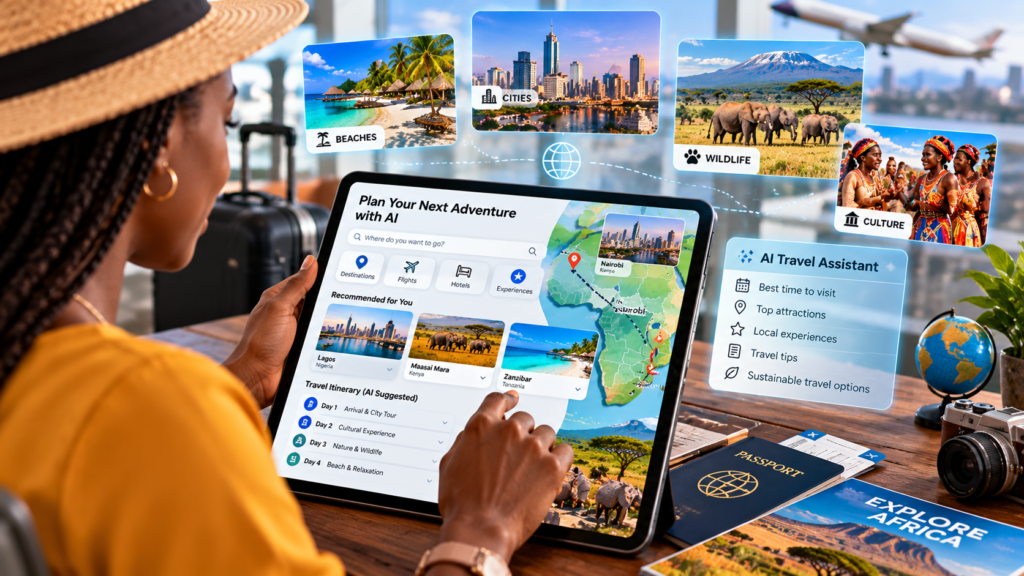
6. Kenya Uses AI and Digital Technology to Reimagine Tourism
Kenya placed digital innovation and artificial intelligence at the centre of its tourism conversation during World Tourism Day 2026.
The country’s tourism authorities highlighted the potential of technology to diversify tourism products, improve destination marketing and reach new audiences.
One of the interesting developments was KenyaLIVE, a digital tourism initiative launched by the Kenya Wildlife Service on September 22.
The platform provides live wildlife experiences from Kenyan parks through the KWS YouTube channel, allowing audiences around the world to watch wildlife in real time.
Kenya is also exploring the development of sports tourism in the North Rift, building on the region’s reputation for athletics and high-altitude training.
Why it matters
Digital tourism is changing the way destinations attract visitors.
A traveller can now discover a destination through social media, watch a live wildlife experience, research attractions using AI and potentially plan an entire trip without initially visiting a traditional travel agency.
For African destinations, this creates an opportunity to reach international audiences at a much lower marketing cost.

🌎 Global Travel News September 2026
7. World Tourism Development Conditions Improve Despite Global Headwinds
The World Economic Forum’s Travel & Tourism Development Index 2026, published in September, found that tourism development conditions have strengthened across most economies.
The report found that 14 of 17 tourism-development pillars improved between 2024 and 2026, while average scores increased by approximately 2%.
Improvements were recorded in areas including cultural attractions, tourism infrastructure and services, air connectivity and digital readiness.
However, the report also identified continuing challenges, including rising costs, economic and geopolitical uncertainty, sustainability pressures and workforce issues.
The WEF noted that destinations are becoming increasingly digitally enabled, with ICT readiness among the areas showing significant improvement.
Why it matters
Tourism growth is no longer simply about having attractive destinations.
Countries increasingly need reliable infrastructure, air connectivity, digital systems, skilled workers, sustainable tourism policies and an environment that makes travel easier.
For African destinations, these factors will be crucial to converting tourism potential into long-term economic value.

8. Global Tourism Grows Slowly as Costs and Geopolitical Tensions Weigh on Travel
International tourism remained resilient during the first half of 2026, but growth was modest.
UN Tourism reported approximately 690 million international tourist arrivals between January and June 2026, representing a 0.4% increase compared with the same period in 2025.
Growth slowed during the second quarter as geopolitical tensions, higher oil prices, rising costs and disruptions affecting some travel routes weighed on international tourism.
Africa, however, performed better than the global average, recording 4% growth during the same period.
Why it matters
The figures show that people continue to travel despite economic and geopolitical uncertainty, but affordability and confidence remain important factors in travel decisions.
For tourism businesses, the challenge is increasingly about providing value, flexibility and compelling experiences while controlling operating costs.
9. World Tourism Day 2026 Focuses on AI and the Future of Travel
World Tourism Day was celebrated on September 27, 2026, with the global theme:
“Digital Agenda and Artificial Intelligence to Redesign Tourism”
The theme reflects the growing influence of artificial intelligence on almost every part of the tourism journey.
AI is changing how travellers search for destinations, compare options, create itineraries and discover experiences.
For tourism businesses, AI is also becoming increasingly important for marketing, customer service, data analysis, content creation and destination management.
The United Nations highlighted the potential of AI to create new opportunities for tourism, including strengthening small businesses and improving services.
However, technology must remain inclusive and human-centred so that smaller destinations, tourism workers and local communities are not left behind.
Nigeria also joined the global celebration on September 27, highlighting the importance of digital transformation and artificial intelligence to the country’s tourism future.
Why it matters
AI is no longer a future concept for tourism.
It is already changing how destinations are discovered, how travel content is produced and how tourists make decisions.
The challenge for Africa is to ensure that the continent does not simply become a consumer of tourism technology developed elsewhere, but also builds the digital skills, platforms and businesses needed to participate in the next generation of tourism.
What September 2026 Means for Travel and Tourism
September’s developments reveal several important trends shaping the tourism industry.
1. Africa is growing
Africa’s 4% increase in international arrivals during the first half of 2026, compared with 0.4% global growth, demonstrates the continent’s continuing tourism potential.
2. Domestic and regional tourism matter
Nigeria’s Ember to Remember campaign, Ibom Air’s five-million-passenger milestone and the Botswana-Mozambique tourism partnership all demonstrate the importance of strengthening travel within and between African destinations.
3. Connectivity remains critical
Air connectivity continues to influence where tourists can go. In addition, how easily they can move between destinations and how much time and money they spend travelling.
4. Digital tourism is accelerating
From KenyaLIVE to AI-powered travel planning, tourism is becoming increasingly digital.
5. Tourism must become more resilient
The global tourism industry is still dealing with geopolitical uncertainty, inflation, higher travel costs, climate pressures and workforce challenges.
Destinations that can adapt while maintaining quality and affordability will be better positioned for long-term growth.

Frequently Asked Questions: Travel News September 2026
What happened in Nigerian tourism in September 2026?
Major developments included the launch of Nigeria’s 100-day Ember to Remember 2026 tourism season. Additionally, the 22nd Akwaaba African Travel Market in Lagos and Ibom Air reaching five million passengers.
How did African tourism perform in 2026?
Africa recorded a 4% increase in international tourist arrivals during the first half of 2026, significantly above the global growth rate of 0.4%.
What was the theme of World Tourism Day 2026?
The theme was “Digital Agenda and Artificial Intelligence to Redesign Tourism.”
Why is AI important to tourism?
AI is changing destination discovery, trip planning, customer service, marketing, tourism operations as well as the way travellers experience destinations.
Which African countries are using digital tourism technology?
Kenya is one example. Its KenyaLIVE initiative allows audiences around the world to watch live wildlife experiences from Kenyan parks online.
Stay Connected with Tour Africa
Want more travel news, destination inspiration and tourism updates?
Subscribe to the Tour Africa Magazine Newsletter and get inspiring travel stories, destination guides, tourism news, travel tips, cultural experiences and exclusive updates delivered straight to your inbox.
👉 Subscribe to the Tour Africa Magazine Newsletter
Join the Tour Africa community and never miss an adventure.
Conclusion
Travel News September 2026 showed that the future of travel and tourism will be shaped by more than visitor numbers.
Connectivity, technology, domestic tourism, regional cooperation, sustainability and innovation are becoming equally important.
For Nigeria and the wider African tourism industry, the opportunity is significant.
Africa already has extraordinary natural attractions, cultural heritage, food, festivals, wildlife and creative industries. However, the challenge is to connect these assets with better infrastructure and stronger regional cooperation. Therefore, effective digital marketing and technology that makes African destinations easier to discover and experience should be prioritised.
As the world enters a new era of AI-powered tourism, the countries and businesses that successfully combine technology with authentic human experiences will be best positioned to attract the next generation of travellers.
Tour Africa Magazine will continue to bring you the latest developments shaping travel and tourism across Nigeria, Africa and the world.