
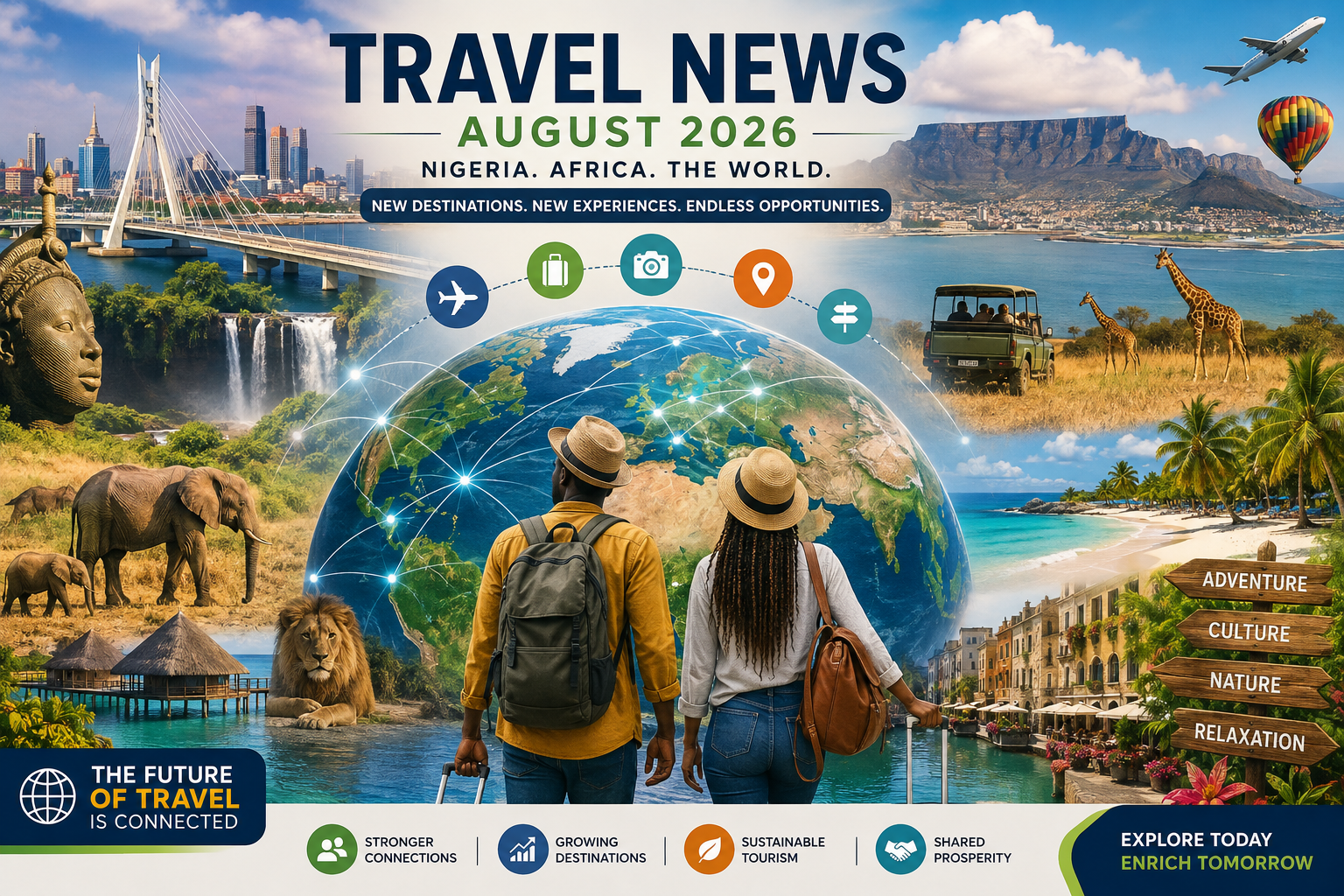
Travel News August 2026 highlights a tourism industry that continues to evolve across Nigeria, Africa and the wider world. This month, destinations are focusing on culture, investment, connectivity, sustainability and new visitor experiences.
In Nigeria, tourism is increasingly moving beyond traditional destination promotion. Instead, governments, communities and private-sector players are looking at tourism as an economic development tool. Read Travel News July 2026
Meanwhile, Africa continues to record international visitor growth. At the same time, destinations are strengthening road safety, cultural tourism and destination management.
Globally, aviation networks are expanding. However, overtourism, geopolitical disruption and changing traveler preferences are also reshaping the industry.
Here are the major stories shaping Travel News August 2026.
Nigeria Travel News
1. Eti-Osa Unveils 2026 Carnival to Boost Tourism and Economic Growth
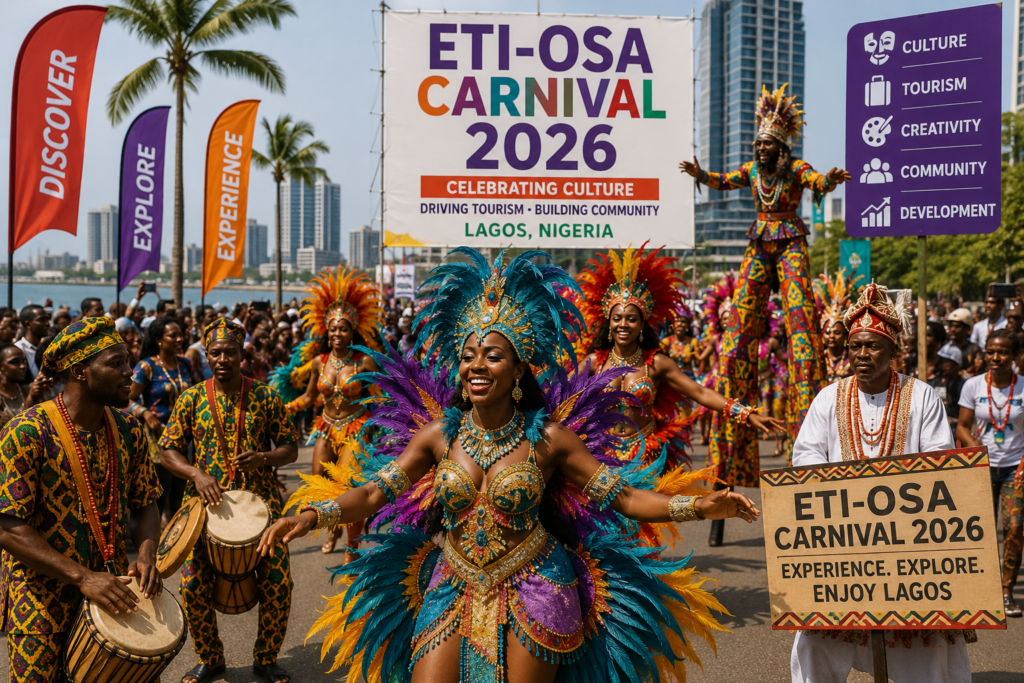
Eti-Osa Local Government Area in Lagos unveiled its 2026 carnival in August, positioning the event as a vehicle for cultural preservation, tourism development, job creation and economic growth.
The carnival is designed to showcase Eti-Osa’s cultural identity through traditional dances, folklore, royal processions, indigenous music and colourful costumes.
More importantly, the initiative connects cultural celebration with destination development. Eti-Osa has beaches, waterfronts, hospitality businesses, historical landmarks and other attractions that can strengthen its tourism proposition.
Therefore, the carnival represents more than entertainment. It demonstrates how local festivals can become platforms for destination marketing- Fun Places to Visit in Lagos, community participation and tourism investment–Nigeria’s Tourism Economy.
For Lagos, this approach could help distribute tourism activity beyond the city’s better-known attractions- Complete Guide to Tourism in Lagos. It could also create opportunities for hotels, restaurants, transport providers, artisans, event companies and tour operators.
2. Nigeria Launches a 100-Day Ember Tourism Season
Nigeria’s Federal Ministry of Art, Culture, Tourism and the Creative Economy announced Ember to Remember 2026, a coordinated 100-day tourism season running from September through December.
The initiative brings together festivals, concerts, cultural celebrations, food, fashion, nightlife and destination experiences under a national tourism campaign.
This development is significant because the final months of the year already generate substantial travel activity in Nigeria.
However, the new approach seeks to organise that demand into a structured tourism season. Government and private-sector collaboration will therefore be important.
If implemented effectively, the campaign could support businesses across accommodation- Top Resorts in Lagos and Nigeria, transportation, entertainment, food, retail and tour operations.
It also gives Nigeria an opportunity to present its end-of-year tourism calendar as a coordinated international product rather than a collection of separate events.
3. Bonny Island Positions Tourism as a New Economic Pillar
Bonny Island in Rivers State is seeking to diversify its economic future by placing tourism, culture and investment alongside its established oil and gas economy.
The Bonny Island Tourism and Investment Summit took place from August 18 to 20, 2026. The event brought together government, industry, investors and community stakeholders around the destination’s tourism potential.
The Discover Bonny initiative proposes a three-year framework for developing the island as a tourism destination.
Importantly, the strategy focuses on cultural heritage, historical attractions, natural assets and hospitality.
At the summit, government representatives also stressed that tourism development should benefit local communities and respect the environment.
This makes Bonny an interesting example of destination development in Nigeria.
Rather than treating tourism as an isolated sector, the island is exploring how tourism can support local enterprise, investment and employment.
Africa Travel News
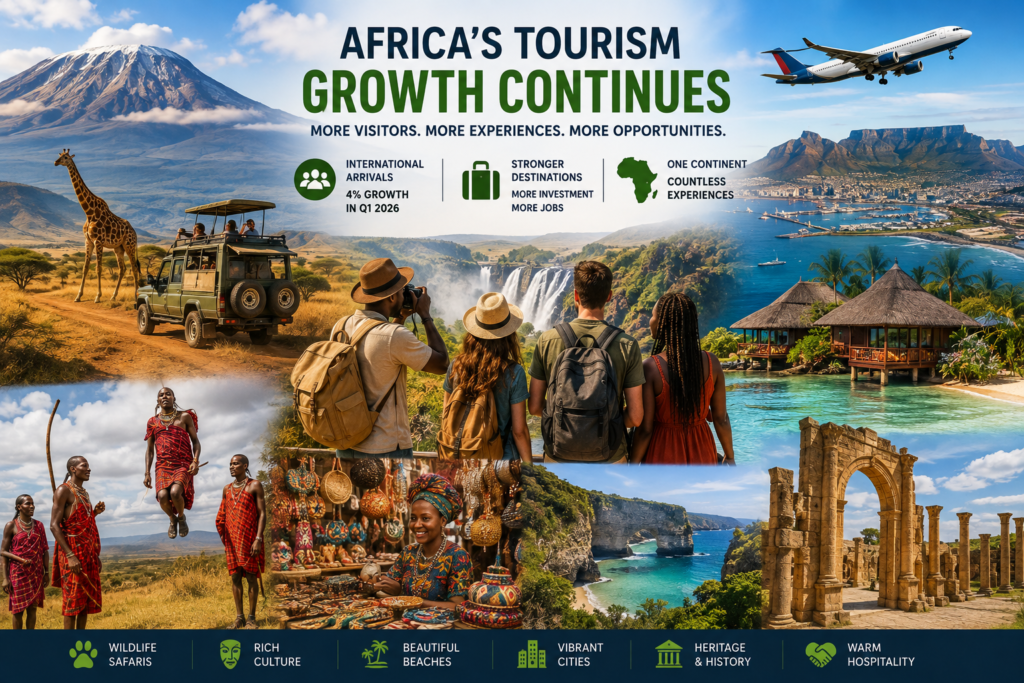
4. Africa Records 4% Growth in International Tourist Arrivals
Africa continued to record tourism growth in the first quarter of 2026.
According to UN Tourism, international tourist arrivals in Africa increased by 4% in Q1 2026 compared with the same period in 2025. North Africa recorded 4% growth, while Sub-Saharan Africa also increased by 4%.
The result is important because it shows that demand for African destinations remains resilient despite wider global uncertainties.
Furthermore, the growth creates opportunities for destinations that can combine strong experiences with reliable infrastructure, connectivity and visitor services.
For African tourism businesses, the message is clear. Growth in arrivals must translate into stronger visitor spending, longer stays, local employment and investment.
Consequently, destination managers need to focus not only on attracting tourists but also on creating competitive tourism ecosystems.
5. Ghana Strengthens Road Safety as Part of Tourism Development
Ghana launched a US$400,000 five-year Road Travel Safety and Tourism Project in August 2026.
The initiative links road safety with tourism confidence, recognising that transportation conditions influence how visitors experience destinations.
Road transportation remains particularly important for African tourism because many visitors combine flights with journeys by road.
Therefore, safer roads can support tourism beyond major airports and cities. They can also help smaller destinations connect with wider tourism circuits.
For the continent, this is a useful reminder that tourism infrastructure involves more than hotels and airports. Roads, signage, emergency response, transport standards and visitor information all influence destination competitiveness.

6. Mozambique Tourism Faces Renewed Safety Concerns
Mozambique’s tourism sector is facing renewed attention over destination safety.
In August, the United States issued travel guidance highlighting terrorist threats in parts of the country, particularly in areas of northern Mozambique. The advisory distinguishes between higher-risk areas and the rest of the country.
Mozambique remains known for beaches, marine experiences, wildlife and safari tourism. However, security developments can influence visitor confidence and tourism investment.
For destination managers, the lesson is important. Tourism growth requires both attractive experiences and effective risk management.
Consequently, clear travel information, local security coordination and responsible destination communication remain essential.
Global Travel News
7. Hotel Groups Move Beyond Europe’s Most Crowded Destinations
Overtourism is changing the way major hotel groups think about European expansion.
Recent industry reporting shows hotel companies increasing their focus on inland, rural and second-tier European destinations as popular Mediterranean locations experience overcrowding.
Travelers are also showing greater interest in less-saturated places.
As a result, destinations outside traditional tourism hotspots are gaining opportunities to attract visitors.
This trend has an important lesson for Africa.
Countries do not necessarily need to compete only through their most famous attractions. Instead, they can develop secondary cities, rural communities, cultural landscapes and lesser-known experiences.
For African destinations, strategic destination marketing could therefore turn overlooked locations into new tourism products.

8. Airlines Target More Secondary and Leisure Destinations
Aviation networks continue to adapt to changing travel demand- International Aviation Trends.
United Airlines announced a major international expansion that includes new routes to destinations such as Ljubljana, Marseille, Valencia, Ibiza, Okinawa, the Azores, Sardinia and Sicily. Many of the new routes target destinations outside the traditional largest European gateways.
The expansion shows how airlines are responding to demand for distinctive experiences and alternative destinations.
Connectivity matters because tourists can only visit destinations that they can reach conveniently.
For Africa, this reinforces the importance of developing stronger air links between major source markets and emerging destinations.
Improved connectivity can support leisure tourism, business travel, cultural tourism and diaspora travel at the same time.

9. Incheon Overtakes Dubai as the World’s Busiest International Passenger Hub
Global aviation patterns have also shifted in 2026.
In the first half of the year, Seoul’s Incheon International Airport overtook Dubai International Airport in international passenger traffic, according to recent reporting. Incheon handled 38.4 million international passengers during the period.
The shift reflects the impact of geopolitical disruption on global aviation routes.
Dubai experienced significant traffic disruption following restrictions affecting Gulf airspace. Meanwhile, East Asian connectivity benefited from changes in international routing.
The development demonstrates how quickly global travel networks can change.
For African aviation hubs, the lesson is particularly relevant. Strong infrastructure, geographic connectivity, airline partnerships and resilience can determine which airports become major gateways.
What August 2026 Means for Tourism
The major stories from Travel News August 2026 point to several important trends.
Tourism Is Becoming More Investment-Focused
Nigeria’s developments demonstrate a growing emphasis on tourism investment.
Eti-Osa is connecting culture with economic opportunity. Bonny Island is positioning tourism as part of economic diversification. Meanwhile, the Ember to Remember campaign is seeking to connect tourism businesses around a national seasonal proposition.
Therefore, tourism is increasingly being viewed as an economic ecosystem.
Culture Remains a Powerful Tourism Asset
Festivals continue to provide destinations with opportunities to attract visitors and strengthen cultural identity-J Rnadle Museum Visit.
The Osun-Osogbo Festival remains one of Nigeria’s most significant cultural tourism events. The 2026 festival ran from July 27 to August 7 and included cultural, entrepreneurial and artistic activities.
The festival also included an entrepreneurial fair, creating a direct connection between cultural tourism and local business activity.
Consequently, cultural tourism can create value beyond visitor numbers.
Connectivity Will Remain Critical
Air routes continue to shape tourism opportunities.
When airlines open new routes, destinations gain access to new visitor markets. Conversely, geopolitical disruptions can quickly redirect international traffic.
Therefore, African destinations need to consider aviation strategy as part of tourism development.
Travelers Are Looking Beyond the Famous Places
Overcrowding is encouraging the tourism industry to explore alternatives to traditional hotspots.
As a result, secondary cities, rural areas and lesser-known destinations are becoming more important.
This creates an opportunity for Africa.
The continent has thousands of attractions that remain outside the major international tourism circuits. With better infrastructure, packaging and marketing, more of these destinations could participate in global tourism growth.
What Should African Tourism Businesses Watch Next?
Tourism businesses should watch five areas closely.
First, domestic and regional travel will remain important as destinations strengthen intra-African tourism.
Second, cultural festivals can become stronger tourism products when organisers connect them with accommodation, transportation, food, crafts and guided experiences.
Third, air connectivity will continue to influence destination competitiveness.
Fourth, sustainability and community participation will become increasingly important as destinations manage growth.
Finally, digital destination marketing will influence how travelers discover less-known places.
For tourism businesses, the opportunity is therefore not simply to sell accommodation or tours. Instead, businesses can help build complete destination experiences.
Frequently Asked Questions About Travel News August 2026
What are the major Travel News August 2026 stories?
The major stories include Nigeria’s Ember to Remember tourism season, the Eti-Osa Carnival, Bonny Island’s tourism investment drive, Africa’s 4% tourism arrival growth, Ghana’s road safety initiative and major global aviation and destination trends.
Is African tourism growing in 2026?
Yes. UN Tourism reported that international tourist arrivals in Africa increased by 4% in the first quarter of 2026. Both North Africa and Sub-Saharan Africa recorded 4% growth.
What is Ember to Remember 2026?
Ember to Remember 2026 is a Nigerian 100-day tourism season planned for September through December 2026. It aims to bring festivals, concerts, culture, food, fashion, nightlife and destination experiences into a coordinated tourism campaign.
Why is Bonny Island important for Nigerian tourism?
Bonny Island is exploring tourism as a new economic pillar alongside its established oil and gas economy. Its tourism strategy focuses on culture, heritage, natural attractions, hospitality and investment.
Why does air connectivity matter to tourism?
Air connectivity makes destinations easier to reach. Therefore, new routes can open destinations to new visitor markets, while disrupted routes can reduce tourism demand.
How is overtourism changing global travel?
Overtourism is encouraging travelers and tourism businesses to look beyond heavily visited destinations. Consequently, secondary cities, rural areas and lesser-known attractions are gaining greater attention.
The Bottom Line
Travel News August 2026 shows an industry entering a new phase.
Nigeria is increasingly positioning tourism as an economic development tool. Across Africa, visitor numbers continue to grow, while destinations are improving the infrastructure and services needed to support that growth.
Globally, meanwhile, aviation networks are changing and overtourism is pushing travelers toward alternative destinations.
The opportunity for Africa is significant.
The continent has the culture, nature, heritage and creativity to attract more visitors. However, sustainable growth will require investment, connectivity, professional tourism businesses, strong destination management and meaningful community participation.
Ultimately, the future of tourism will belong to destinations that do more than attract visitors. They will create experiences that benefit travelers, businesses and the communities that call those destinations home.