
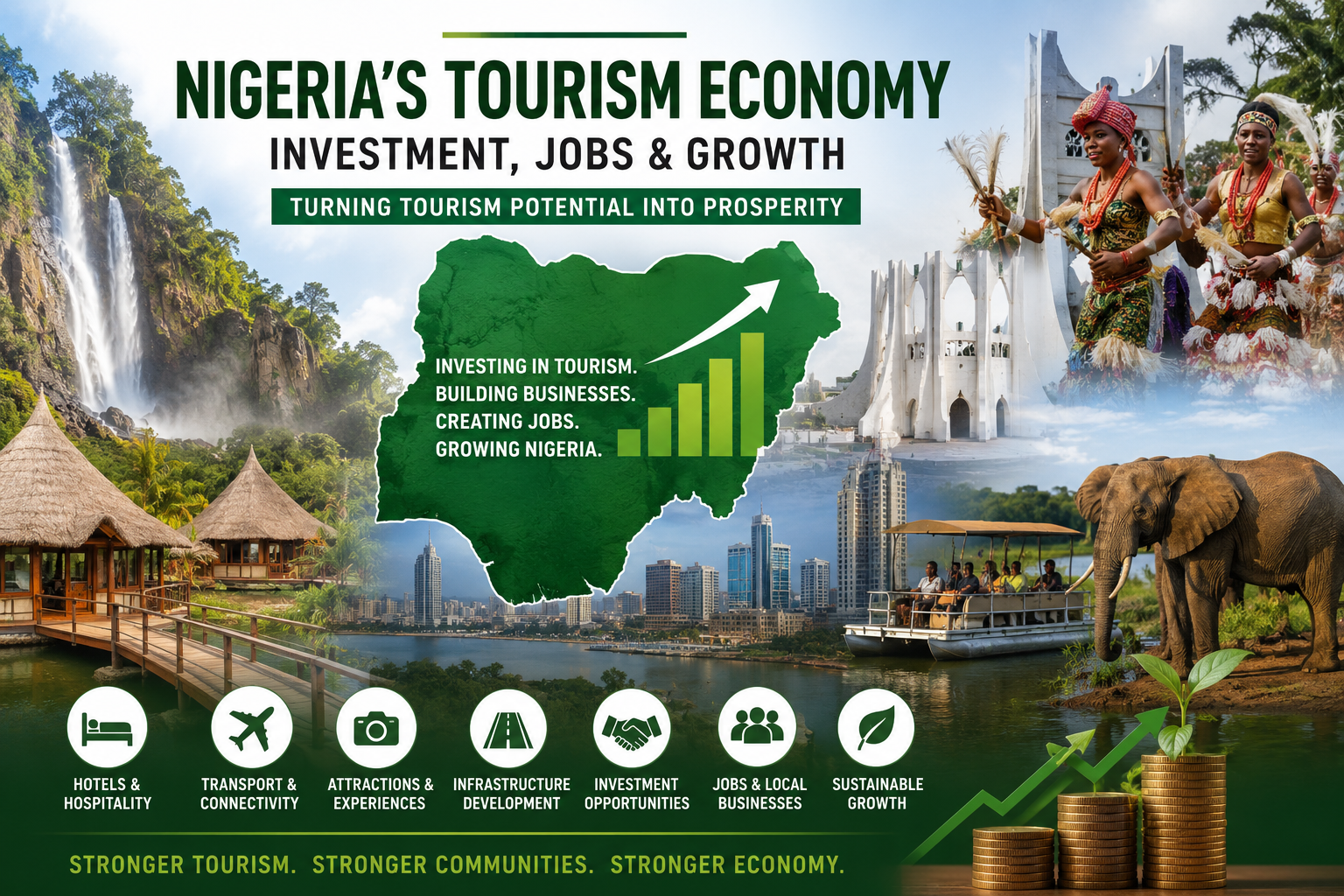
Nigeria’s Tourism Economy
Nigeria’s tourism economy is entering an important phase. Across the country, governments, tourism businesses and investors are increasingly looking beyond tourism as simply a leisure activity and considering its potential to contribute to investment, employment, enterprise development and economic diversification.
The opportunity is significant. Nigeria has cultural heritage, festivals, natural attractions, entertainment, hospitality businesses, business-tourism opportunities and diverse destinations spread across its 36 states and the Federal Capital Territory.
However, potential alone does not create a strong tourism economy. Destinations need investment, infrastructure, effective management, skilled people, reliable information and an environment in which tourism businesses can operate and grow.
That is why the question is no longer simply whether Nigeria has tourism potential. Read Complete Guide to Tourism in Lagos
The more important question is:
How can Nigeria turn its tourism potential into sustainable investment, jobs and economic growth?
Why Tourism Matters to Nigeria’s Economy
Tourism connects several parts of the economy.
A visitor who travels to a destination may spend money on accommodation, transportation, food, attractions, entertainment, shopping, guides and other services. That spending can support hotels, restaurants, transport operators, tour companies, artisans, event businesses and many smaller enterprises.
The impact therefore extends beyond the attraction itself.
A successful tourism destination can create opportunities for businesses throughout its surrounding economy. In addition, tourism can create markets for locally produced food, crafts, fashion, cultural products and creative services.
Globally, Travel & Tourism remains a major economic sector. The World Travel & Tourism Council reported that the sector contributed US$11.6 trillion to global GDP in 2025 and supported 366 million jobs worldwide. Its 2026 research also forecasts further growth.
For Nigeria, the opportunity is to capture a greater share of this economic activity while developing tourism in ways that benefit local communities and businesses.
A New Focus on Mapping Nigeria’s Tourism and Economic Potential
One significant development came in June 2026, when the Federal Government launched the National Compendium on the Economic and Tourism Profiles of the 36 States and the Federal Capital Territory.
The initiative is designed to bring information about the economic and tourism potential of Nigeria’s sub-national regions together in one resource.
Vice President Kashim Shettima said states need to properly document their assets, attract investment, grow tourism and convert local potential into jobs and shared prosperity. The Federal Government described the compendium as a tool for investment promotion, economic planning and tourism development.
This is important because investors need information before they invest.
A destination may have a beautiful landscape, historic site or cultural festival, but investors also need to understand its accessibility, visitor potential, infrastructure, market opportunities, available services and wider economic environment.
Better documentation can therefore help turn “we have tourism potential” into “here is the investment opportunity.”
Why Tourism Investment Matters
Tourism investment goes far beyond constructing hotels.
A functioning tourism destination requires an ecosystem.
That can include:
- Hotels and other accommodation
- Restaurants and food businesses
- Tourist attractions
- Museums and cultural centres
- Transportation
- Airports and road networks
- Tour operators
- Travel agencies
- Digital booking platforms
- Event and entertainment businesses
- Visitor information services
- Tour guides
- Security and safety services
- Skills development
- Destination marketing
When these elements work together, a destination becomes more attractive to visitors and investors.
The result can be a cycle of growth.
Better infrastructure → better visitor experience → greater demand → stronger businesses → more investment → more employment.
However, the reverse can also happen. Poor access, inadequate infrastructure or uncertainty can discourage visitors and investors.

Hotels Are Only One Part of the Opportunity
Hospitality is an important part of Nigeria’s tourism economy, but tourism investment should not be reduced to hotel development.
Nigeria needs investment across the wider visitor economy.
That includes attractions, leisure facilities, cultural experiences, entertainment, transportation, destination management and digital services.
For example, a historic site may attract visitors but still generate limited economic value if there is no reliable transportation, visitor centre, trained guide, nearby accommodation or supporting commercial activity.
Investment should therefore focus on complete tourism ecosystems, rather than isolated projects.
Recent industry discussions have also highlighted regulation, financing, infrastructure and legal frameworks as issues that need attention if Nigeria’s hospitality and tourism sectors are to attract and sustain investment.
The Role of State Governments
Tourism development in Nigeria cannot be driven by the Federal Government alone.
States control or influence many of the assets, locations and local conditions that determine whether tourism can thrive.
The June 2026 national compendium initiative specifically emphasised the role of sub-national governments in documenting assets and turning local opportunities into investment and development.
State governments can therefore play an important role by:
- Identifying tourism assets
- Improving access roads and supporting infrastructure
- Developing destination-management strategies
- Providing reliable tourism information
- Supporting local tourism businesses
- Creating investment-friendly policies
- Protecting cultural and natural assets
- Developing tourism skills
- Promoting destinations
- Working with private-sector operators
The opportunity is particularly important because Nigeria’s tourism offering is highly diverse.
Lagos does not have the same tourism proposition as Cross River. Osun does not have the same assets as Bauchi, while Kano, Kaduna, Plateau, Akwa Ibom and other states have their own distinct cultural, historical and natural attractions.
The strength of Nigeria’s tourism economy may therefore lie partly in developing many different destinations rather than depending on one tourism centre.
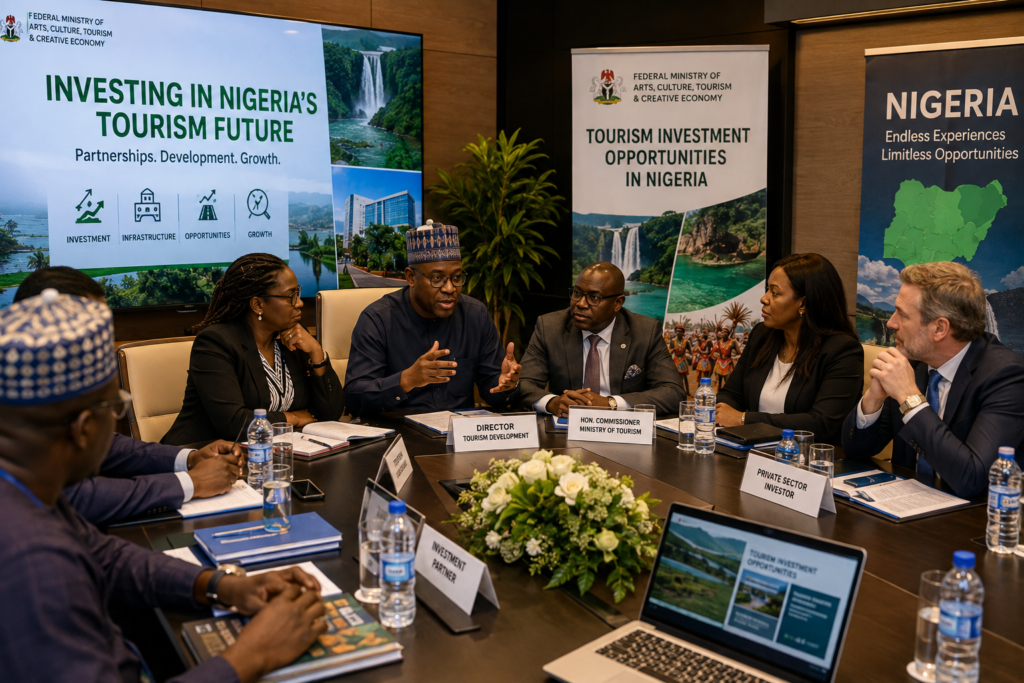
Public-Private Partnerships Can Unlock Tourism Potential
Government does not need to finance or operate every tourism project.
The private sector can bring capital, management expertise, technology, marketing capability and commercial experience.
Government, meanwhile, can help create the conditions in which investment becomes possible through infrastructure, regulation, destination planning, security and appropriate incentives.
This makes public-private partnerships particularly relevant.
A successful partnership could involve government providing infrastructure and destination support while private operators develop accommodation, attractions, restaurants, entertainment or visitor services.
The result can be a more sustainable tourism ecosystem than either sector working alone.
Tourism Can Create More Than Traditional Tourism Jobs
One of the strongest arguments for tourism investment is employment.
But tourism employment is not limited to hotel receptionists, tour guides or airline staff.
Tourism can generate opportunities for:
- Drivers
- Chefs
- Event planners
- Photographers
- Content creators
- Digital marketers
- Tour operators
- Travel consultants
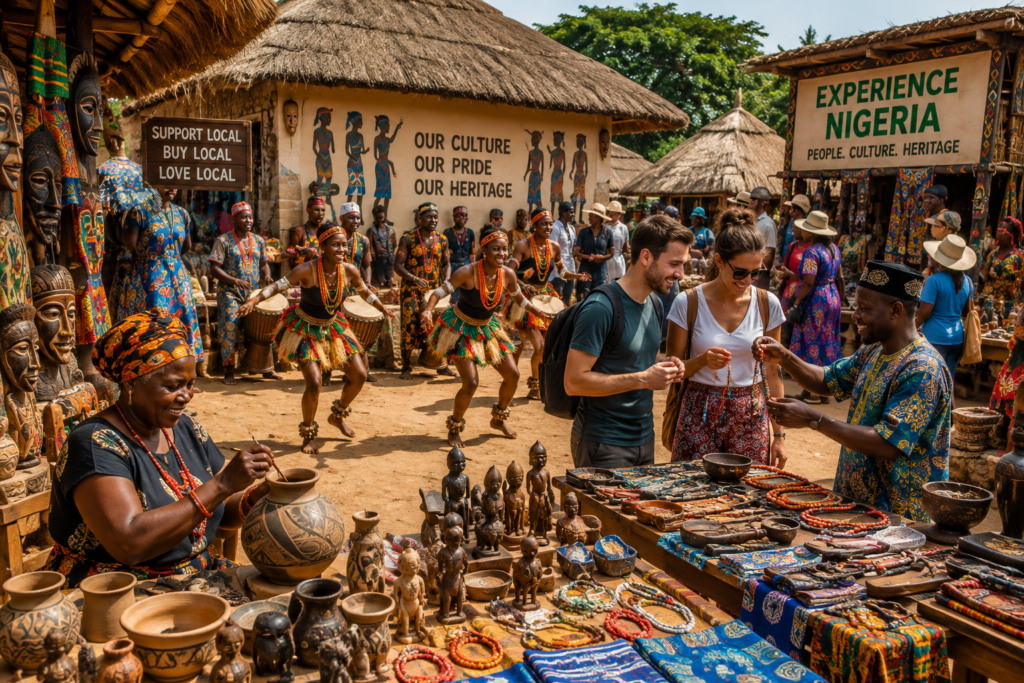
- Artisans
- Fashion designers
- Farmers supplying hospitality businesses
- Security personnel
- Tour guides
- Software developers
- Transport providers
- Cleaning and maintenance companies
This means tourism can connect large businesses with micro, small and medium-sized enterprises.
For communities around attractions, increased visitor activity can create new markets for locally produced goods and services.
The economic opportunity is therefore much broader than the number of people directly employed by hotels or tourism agencies.
Tourism Data Is Part of the Investment Infrastructure
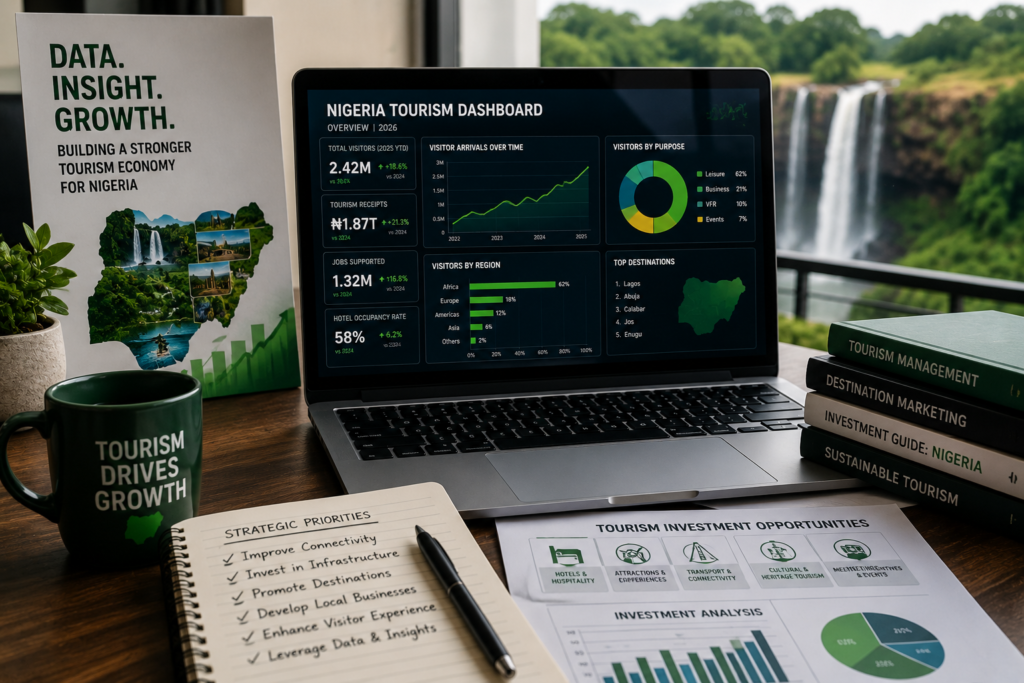
One of Nigeria’s challenges is the availability and consistency of tourism data.
Investors need credible information.
They want to know:
- How many visitors come to a destination?
- Where do they come from?
- How long do they stay?
- What do they spend?
- Which attractions do they visit?
- What is hotel occupancy like?
- What is the demand for accommodation?
- How accessible is the destination?
- What infrastructure already exists?
- What investment opportunities are available?
The tourism industry also needs reliable data to measure whether policies and investments are working.
The WTTC’s Economic Impact Research illustrates the type of information that can support decision-making, covering indicators such as GDP contribution, employment, visitor spending, business and leisure spending and capital investment. Its latest Africa research provides comparable regional data and forecasts through 2026 and beyond.
For Nigeria, stronger tourism data would make it easier for government, investors and tourism businesses to make evidence-based decisions.
Infrastructure Remains Critical
A destination cannot compete effectively if visitors struggle to reach it or have difficulty finding suitable accommodation, transportation and basic services.
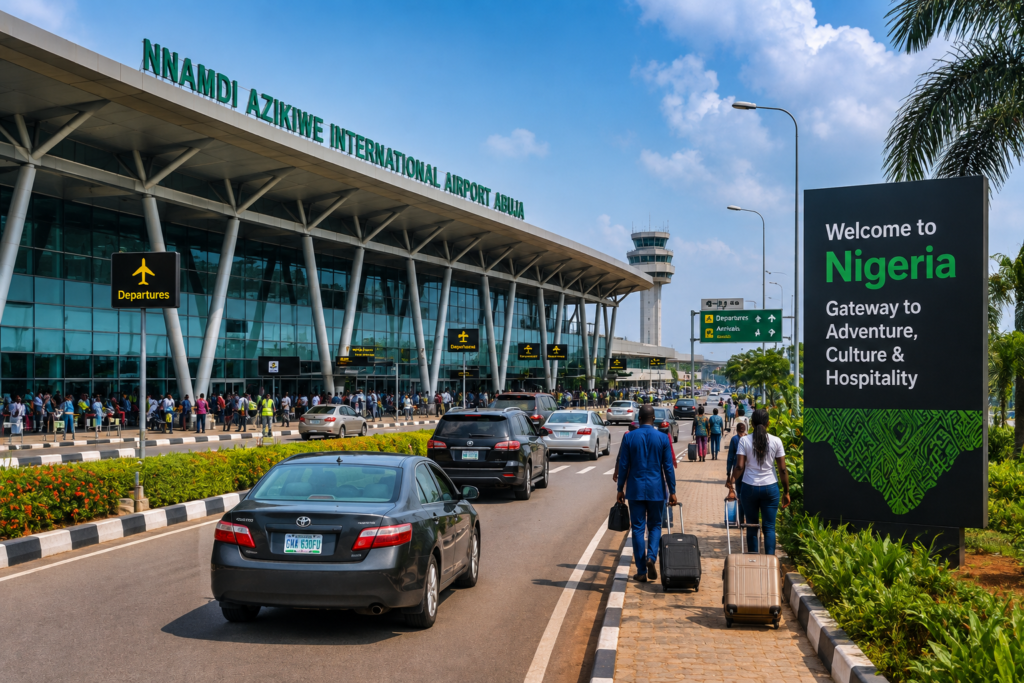
Tourism infrastructure includes much more than airports.
Roads, public transportation, electricity, water supply, telecommunications, internet connectivity, sanitation, signage and visitor facilities can all influence the tourism experience.
Investment in infrastructure can therefore have a double benefit.
It can improve the lives of residents while also making destinations more attractive to visitors and businesses.
Regulation and Ease of Doing Business Matter
Investment also depends on the business environment.
Tourism businesses need clarity about regulations, taxes, licensing, land, financing and operating requirements.
Where rules are unclear or responsibilities overlap, businesses may face additional costs and uncertainty.
In July 2026, the Federation of Tourism Associations of Nigeria called for a review of tourism-related legislation, arguing that regulatory confusion could undermine tourism investment and private-sector businesses.
This highlights an important point: attracting tourism investment is not only about promoting Nigeria’s attractions.
It is also about creating a business environment in which investors can confidently develop and operate tourism businesses.
Turning Tourism Assets Into Economic Value
Nigeria does not have a shortage of tourism assets.
The challenge is converting those assets into products that visitors can discover, access, enjoy and pay for.
That requires several things to happen together.
First, assets must be identified and documented.
Second, destinations must become accessible.
Third, attractions need appropriate facilities and professional management.
Fourth, tourism businesses need access to finance and markets.
Fifth, destinations need effective marketing and distribution.
Finally, the visitor experience must be good enough to encourage recommendations, repeat visits and longer stays.
The national tourism and economic compendium launched in 2026 is therefore potentially important because it moves the conversation towards identifying and presenting opportunities across Nigeria’s states and the FCT. The bigger test, however, will be what happens after documentation: whether the information leads to investment, development and measurable economic outcomes.
What Nigeria Needs to Do Next
Turning tourism potential into economic growth will require sustained action rather than isolated announcements.
Nigeria can strengthen its tourism economy by focusing on:
1. Better tourism data
Reliable visitor, spending, employment and investment data should guide tourism policy and investment decisions.
2. Destination infrastructure
Access, utilities, connectivity and visitor facilities need to improve alongside tourism development.
3. Stronger destination management
Tourism destinations need professional organisations capable of coordinating marketing, investment, visitor experience and asset protection.
4. Private-sector participation
Government should create conditions that encourage responsible private investment in accommodation, attractions, transportation, entertainment and tourism technology.
5. Skills development
A growing tourism economy needs trained workers, entrepreneurs and managers.
6. Stronger local participation
Tourism development should create opportunities for communities and local businesses rather than allowing economic benefits to remain concentrated among a small number of operators.
7. Better investment promotion
Tourism opportunities should be packaged clearly enough for domestic and international investors to understand the opportunity, requirements and potential returns.
The Opportunity Ahead
Nigeria’s tourism economy has the potential to become an important part of the country’s broader economic diversification story.
The country’s cultural heritage, natural attractions, creative industries, hospitality sector and growing interest in destination development provide a strong foundation.
But tourism potential is not the same thing as tourism performance.
The difference lies in investment, infrastructure, management, skills, data, policy and execution.
The launch of a national compendium covering the economic and tourism profiles of Nigeria’s states and the FCT is a useful step towards making opportunities more visible.
The next step is turning information into action.
For Nigeria, that means moving from simply identifying tourism assets to developing them into competitive destinations, investable businesses and experiences that generate income and employment.
The real opportunity is not simply to attract more tourists. It is to build a stronger tourism economy around them.
Frequently Asked Questions
What is Nigeria’s tourism economy?
Nigeria’s tourism economy is the network of businesses, activities, investments and employment connected to travel and tourism, including accommodation, transportation, attractions, restaurants, entertainment, tour operations and related services.
Why is tourism important to Nigeria’s economy?
Tourism can support employment, business activity, investment, local enterprise development and economic diversification. Visitor spending can also benefit businesses beyond the tourism sector.
What can attract more tourism investment to Nigeria?
Reliable tourism data, better infrastructure, effective destination management, clear regulations, investment-friendly policies, skilled workers and strong public-private partnerships can make tourism investment more attractive.
Can tourism create jobs in Nigeria?
Yes. Tourism supports both direct and indirect employment across accommodation, transportation, food services, attractions, entertainment, travel businesses, creative industries and other supporting sectors.
What is the role of state governments in tourism development?
State governments can identify and protect tourism assets, improve local infrastructure, support destination management, provide tourism information and create conditions that encourage responsible investment.
What is the biggest challenge facing Nigeria’s tourism economy?
There is no single challenge. Infrastructure, financing, regulation, reliable data, skills, destination management and ease of doing business all influence the ability of Nigeria’s tourism assets to generate sustained economic value.
How can Nigeria turn tourism potential into economic growth?
Nigeria can do this by combining tourism-asset development with infrastructure, investment, professional destination management, skills development, reliable data, private-sector participation and effective marketing.