
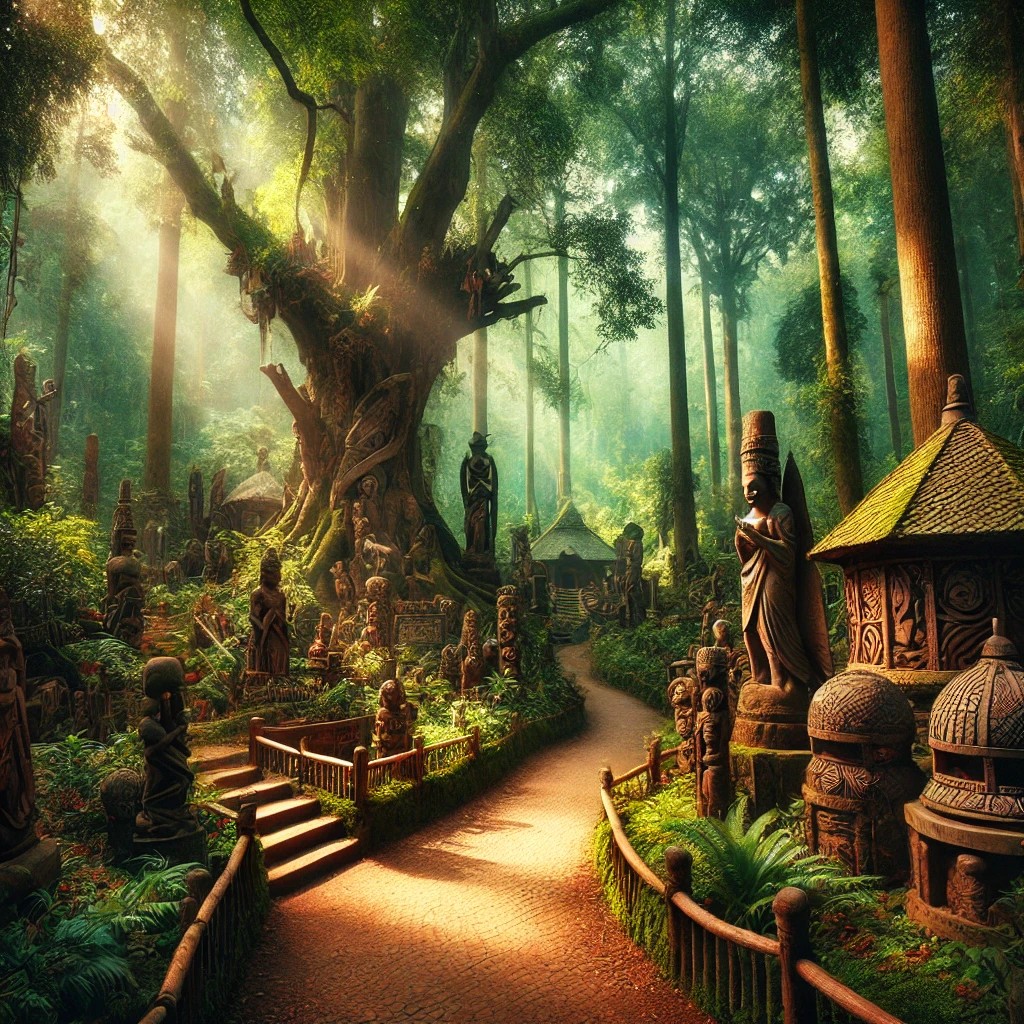
Introduction — What is Osun-Osogbo Grove?
Osun Osogbo Grove is a sacred forest in Osogbo, Osun State, Nigeria, that preserves an important expression of Yoruba spirituality and cultural heritage. The grove surrounds the Osun River and contains shrines, sculptures, sacred spaces and artworks dedicated to Osun and other Yoruba deities. UNESCO recognizes the site as a World Heritage property because it represents an exceptionally important surviving example of the sacred groves once found throughout Yorubaland.
Today, the grove remains more than a tourist attraction. Instead, it functions as a living religious and cultural landscape where worship, traditional knowledge, artistic expression and environmental conservation continue together. Consequently, visitors can experience a heritage destination where nature and spirituality remain closely connected.
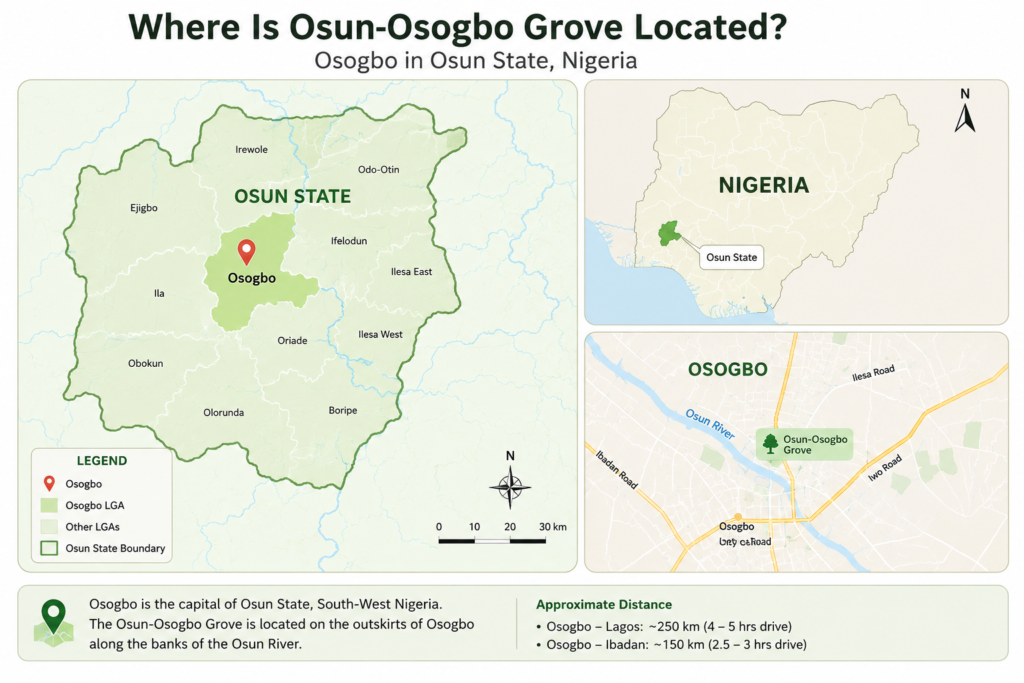
Where Is Osun-Osogbo Grove Located?
Osun Osogbo Grove lies on the outskirts of Osogbo, the capital of Osun State in southwestern Nigeria. The sacred forest extends around the Osun River, which holds an important spiritual position within Yoruba tradition.
Furthermore, UNESCO records the inscribed property as covering approximately 75 hectares, with a 47-hectare buffer zone surrounding it. The location places the grove within an urban environment while retaining a forested landscape that distinguishes it from the surrounding city.
For travellers exploring southwestern Nigeria, Osogbo therefore provides an opportunity to combine cultural tourism, heritage exploration and an understanding of Yoruba traditions.
History of Osun-Osogbo Grove
Osun Osogbo Grove reflects a much older Yoruba tradition of maintaining sacred forests associated with deities and spiritual practices. Historically, many Yoruba settlements maintained sacred groves; however, numerous examples gradually disappeared or became significantly smaller. UNESCO describes Osun-Osogbo as the largest surviving sacred grove of this tradition.
According to the heritage record, Osogbo developed approximately 400 years ago, and the grove became closely connected with the town’s identity, traditions and kingship. Moreover, the sacred landscape preserves stories linking the community, its rulers and the Osun deity.
Over time, artists and traditional custodians helped revive the grove and strengthen its cultural importance. As a result, the site developed into a powerful symbol of Yoruba identity in Nigeria and among Yoruba communities in the diaspora.
Osun, the Yoruba Goddess
Osun Osogbo Grove takes its spiritual identity from Osun, an important deity within Yoruba religious tradition. Yoruba tradition associates Osun with water, fertility, life, prosperity and feminine power.
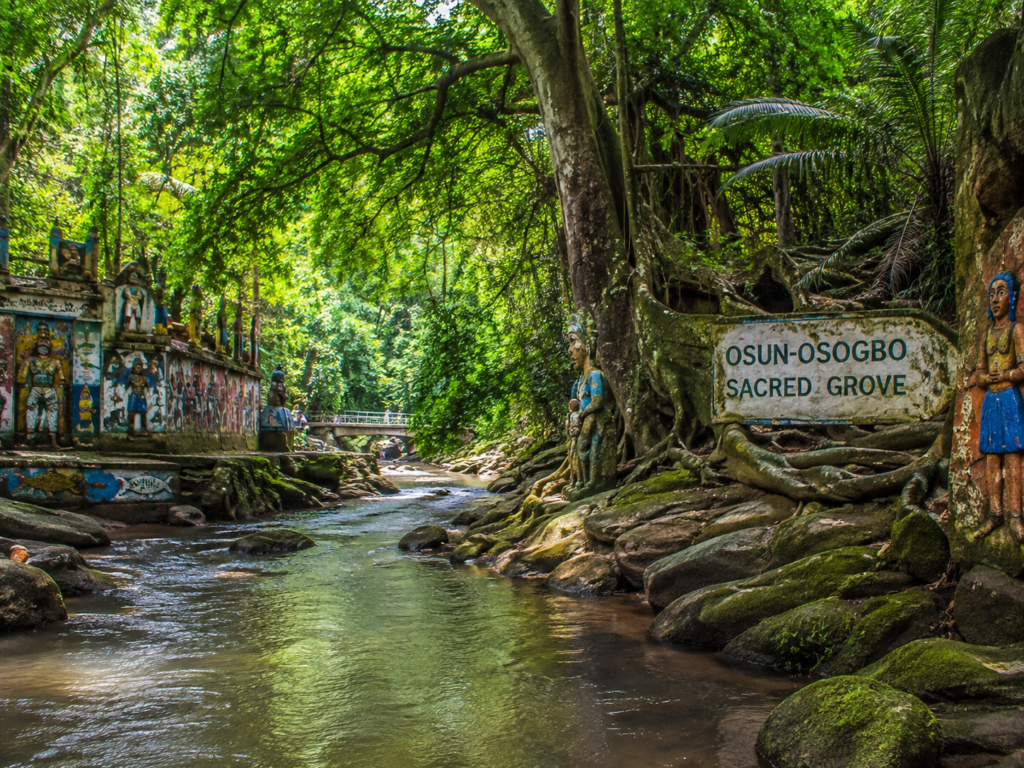
The Osun River flows through the grove and reinforces the connection between the deity and the natural environment. Consequently, the river is not simply a physical feature for visitors; it forms an important part of the sacred landscape.
Traditional worshippers continue to visit the grove for prayers, rituals and other religious activities. Therefore, travellers should understand that the site remains a living sacred place rather than viewing it only as a historical monument.
Susanne Wenger and the Grove
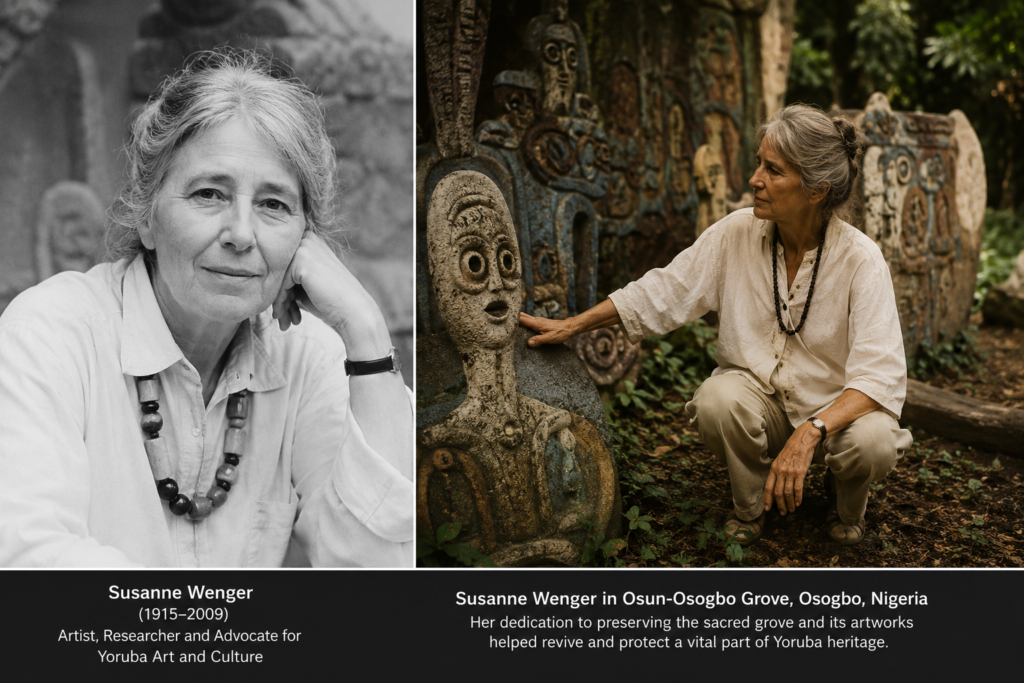
Osun Osogbo Grove also became internationally recognized through the work of Susanne Wenger, an Austrian-born artist who became deeply involved with Yoruba culture and the Osogbo community.
Wenger worked with local artists through the New Sacred Art movement to create and restore sculptures and sacred artworks within the grove. UNESCO specifically identifies her absorption into the Yoruba community and the development of the New Sacred Artists movement as an important part of the grove’s revival.
However, her contribution should be understood within the wider community and traditional context surrounding the grove. Local custodians, religious practitioners, artists and community leaders have all played important roles in maintaining its cultural significance.
Through this collaboration, the grove gained a distinctive collection of twentieth-century artworks that visually reinforce Yoruba cosmology and the spiritual relationship between people, nature and the deities.
The Sculptures, Shrines and Sacred Spaces
Osun Osogbo Grove contains an extraordinary combination of forest, river, shrines, sculptures and sacred spaces. UNESCO records approximately forty shrines, alongside sculptures, artworks, palaces, sacred places and worship points distributed throughout the property.
The sculptures do more than decorate the forest. Instead, they communicate religious ideas, stories and relationships within Yoruba cosmology. Their dramatic forms also create a distinctive visual identity that separates Osun-Osogbo from many conventional heritage destinations.
Visitors should therefore approach these artworks with respect. Some structures serve religious purposes, while others form part of the site’s cultural and artistic heritage.

The Osun-Osogbo Festival
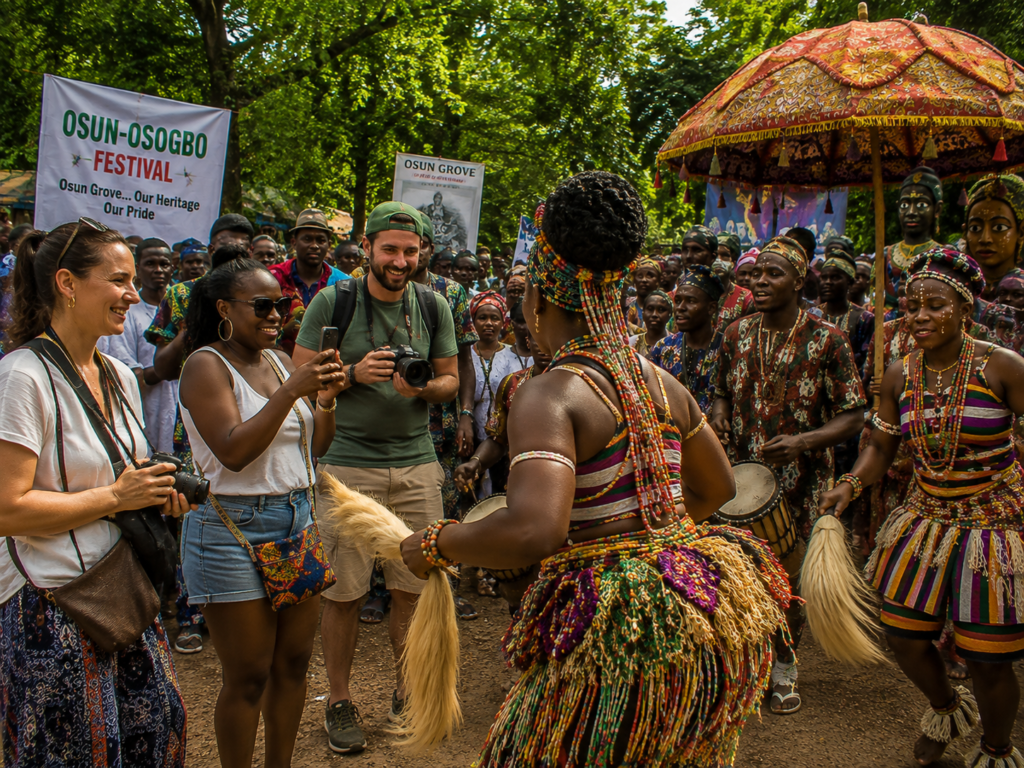
The Osun-Osogbo Festival remains one of the most important annual cultural events associated with the grove. The festival renews the relationship between the people of Osogbo and Osun through processions, prayers, rituals, music and other traditional activities.
Furthermore, UNESCO describes the annual festival as a living and evolving expression of Yoruba beliefs and identifies it as an important part of the property’s cultural significance.
The festival attracts devotees, residents, cultural enthusiasts, researchers and visitors. Consequently, it provides an important opportunity for cultural tourism while also requiring careful management because large visitor numbers can place pressure on the sacred landscape.
For visitors, the festival offers a deeper understanding of Yoruba heritage than sightseeing alone can provide. Nevertheless, travellers should remember that religious ceremonies remain meaningful practices for worshippers.

Nature and Biodiversity
Osun Osogbo Grove demonstrates how cultural heritage and environmental conservation can exist within one landscape. The forest contains important vegetation and wildlife, while the Osun River provides another essential element of the ecosystem.
UNESCO describes the grove as one of the remaining areas of primary high forest in southern Nigeria. It also records more than 400 plant species, with more than 200 known for medicinal uses.
Therefore, protecting the grove means protecting more than sculptures and shrines. Conservation must also safeguard the forest, river, wildlife and traditional knowledge connected with the landscape.
The site nevertheless faces conservation pressures. In its 2026 decision, UNESCO highlighted concerns involving artwork conservation, buffer-zone encroachment and pollution affecting the Osun River.
These challenges demonstrate why responsible tourism matters. Visitors can contribute by respecting designated routes, avoiding damage to artworks and vegetation, and following instructions from site managers and traditional custodians.
UNESCO World Heritage Status
Osun Osogbo Grove became a UNESCO World Heritage Site in 2005. UNESCO inscribed the property under cultural criteria recognizing its artistic exchange, representation of Yoruba sacred-grove traditions and continuing connection with Yoruba religious and cosmological systems.
The designation places Osun-Osogbo among Nigeria’s two properties currently inscribed on the UNESCO World Heritage List, alongside Sukur Cultural Landscape.
Importantly, World Heritage status does not mean that conservation work has finished. Instead, it creates an ongoing responsibility to protect the site’s outstanding universal value.
UNESCO’s latest 2026 decision continues to emphasize conservation, community engagement and protection of the grove’s cultural and natural qualities.
Why Visit Osun-Osogbo Grove?
Osun Osogbo Grove offers travellers an experience that goes beyond conventional sightseeing. Visitors can explore a sacred forest while learning about Yoruba spirituality, traditional art, environmental relationships and Nigerian history.
Moreover, the destination provides opportunities for cultural learning through its sculptures, shrines, river landscape and traditional practices. Photography enthusiasts can also appreciate the distinctive relationship between natural scenery and monumental artworks.
For international travellers, the grove offers another perspective on Nigeria’s cultural richness. Meanwhile, domestic travellers can discover an important heritage destination within their own country.
Most importantly, visitors can gain a deeper appreciation of how communities preserve cultural identity through places that remain relevant to contemporary life.
What Visitors Should Know
Osun Osogbo Grove is an active sacred site, so visitors should approach the destination respectfully. Dress appropriately, follow local instructions and avoid treating religious ceremonies as entertainment.
Additionally, visitors should avoid touching sculptures, entering restricted areas or disturbing worshippers. Photography may also have restrictions in particular sacred locations, so travellers should ask before taking photographs during ceremonies.
Because the grove combines natural and cultural heritage, visitors should also avoid littering, damaging vegetation or interfering with wildlife.
Furthermore, conditions and visitor arrangements can change, especially during major festivals. Travellers should therefore confirm current access information, opening arrangements, local guidance and festival schedules before travelling.
How Osun-Osogbo Supports Cultural Tourism
Osun Osogbo Grove demonstrates how heritage can contribute to Nigeria’s wider tourism economy. Cultural destinations can attract visitors, support local guides and businesses, create educational opportunities and encourage communities to preserve traditions.
The grove also shows why tourism development must balance economic opportunity with conservation. If visitor numbers grow without proper management, tourism can place additional pressure on fragile cultural and natural resources.
Therefore, responsible tourism should form part of the destination’s long-term strategy. Community participation, heritage education, conservation funding and respectful visitor management can help ensure that tourism strengthens rather than weakens the grove.
For Tour Africa, destinations such as Osun-Osogbo also demonstrate the broader potential of African tourism. Africa’s heritage resources can support meaningful travel experiences while creating economic value for communities.
Conclusion
Osun Osogbo Grove remains one of Nigeria’s most remarkable cultural landscapes, bringing together Yoruba spirituality, traditional art, biodiversity and living heritage. Its importance extends beyond its sculptures and forest because the grove continues to support religious practices and cultural identity.
Furthermore, the work of Susanne Wenger and the New Sacred Art movement helped revive the grove’s artistic landscape, while traditional custodians and the wider community continue to sustain its living heritage.
Today, UNESCO World Heritage recognition gives the grove international significance. However, its future depends on responsible conservation, community participation and respectful tourism.
Ultimately, Osun-Osogbo reminds travellers that Nigeria’s tourism story includes far more than beaches, cities and entertainment. It also includes sacred landscapes, ancient traditions, living communities and cultural knowledge that deserve to be experienced, respected and protected.
Frequently Asked Questions About Osun Osogbo Grove
What is Osun Osogbo Grove?
Osun Osogbo Grove is a sacred forest in Osogbo, Osun State, Nigeria, dedicated to Osun and associated with Yoruba spirituality, art and cultural traditions.
Why is Osun Osogbo Grove important?
The grove is important because it preserves a rare surviving example of Yoruba sacred-grove traditions while combining spiritual, artistic, environmental and historical values.
When did Osun Osogbo Grove become a UNESCO World Heritage Site?
UNESCO inscribed Osun-Osogbo Sacred Grove on the World Heritage List in 2005.
Who was Susanne Wenger?
Susanne Wenger was an Austrian-born artist who became closely associated with Osogbo and worked with local artists to revive and strengthen the grove’s sacred artistic traditions.
What is the Osun Osogbo Festival?
The Osun Osogbo Festival is an annual cultural and religious celebration that renews the relationship between the people of Osogbo and Osun through traditional ceremonies and processions.
Can tourists visit Osun Osogbo Grove?
Yes. The grove is a major cultural tourism destination, although visitors should respect its sacred character, follow local guidance and observe restrictions around religious activities.
What can visitors see at Osun Osogbo Grove?
Visitors can encounter forest landscapes, the Osun River, shrines, sculptures, sacred spaces and artworks connected with Yoruba religious traditions.
Why should Osun Osogbo Grove be protected?
The grove preserves cultural traditions, sacred practices, biodiversity, traditional knowledge and important artworks. UNESCO continues to identify conservation challenges that require sustained attention.